No products in the basket.
Understanding the world of 3D printing can be challenging, especially with all the technical jargon. In this comprehensive 3D Printing Glossary, we break down essential 3D printing terms so you can navigate the industry with ease. Whether you're a beginner or an expert, these terms will enhance your knowledge of 3D printing.
Whether you're new to 3D printing or an experienced maker, understanding the language of the industry is essential to getting the most out of your 3D printing projects. Like any specialised field, 3D printing comes with its own set of terms and jargon that can be confusing at first, but once you grasp the basics, it becomes much easier to navigate this exciting world of additive manufacturing.
This basic A to Z guide to 3D printing terminology will help you understand key concepts, processes, and technologies used in 3D printing. From materials and machine components to printing techniques and troubleshooting tips, this glossary will serve as a valuable resource, providing clear and concise definitions to enhance your 3D printing knowledge and skills.
So whether you're curious about what a slicer does, or you've run into issues like warping and need to understand how to fix it, this page is here to guide you every step of the way. Let's dive into the essential terms and definitions that will help you master the art and science of 3D printing!
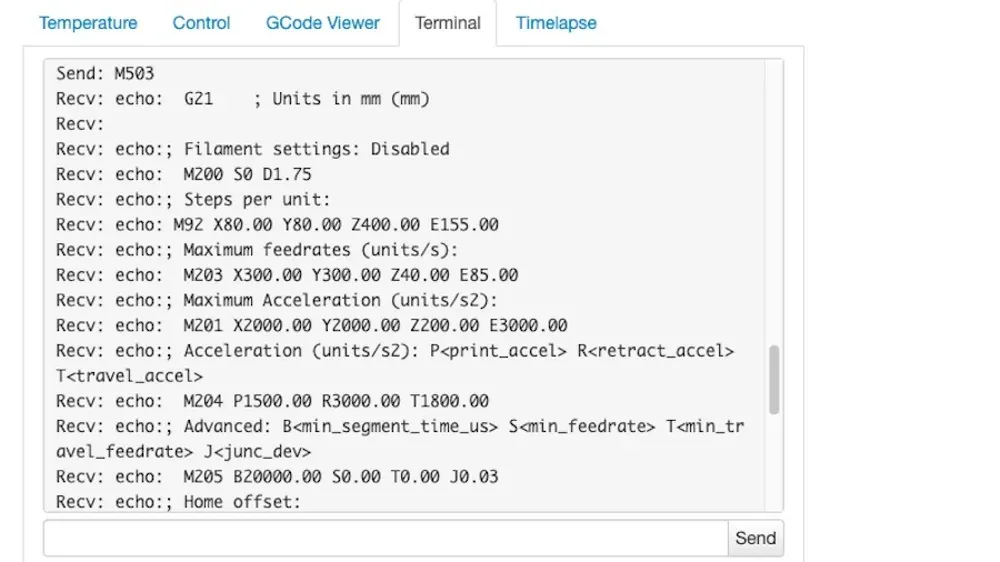
A popular 3D printing filament known for its strength and durability.
The process of creating objects by adding material layer by layer.
The ability of a print to stick to the build plate or itself.
Heating a 3D printed part to relieve internal stresses and increase strength.
A defect or unwanted feature in a 3D print caused by printer issues or settings.
Directions of movement in a 3D printer (X, Y, and Z axes).
Calibration to correct dimensional inaccuracies in one or more axes.
The ability of the first layer to stick to the print bed.
Adjusting the build plate to ensure it is flat and level.
The tightness of the belts controlling the motion of the printer's axes.
Excess filament accumulation causing blobs on the print surface.
A whitish residue on the surface of certain filament types after printing.
An extruder setup where the motor is mounted away from the hotend, connected via a PTFE tube.
Support structures that can be easily snapped off without post-processing.
Printing horizontal spans without support underneath.
The surface on which 3D prints are created.
Software used to design 3D models.
The process of adjusting settings to improve print quality.
Blockage in the hotend or nozzle preventing filament extrusion.
A slicer setting where the nozzle travels within the print to avoid retraction.
Print issues caused by over-tightening the build plate or first layer.
A fan that helps solidify the filament during printing.
A type of 3D printer motion system for the X and Y axes.
A popular slicing software developed by Ultimaker.
Layers of a print separating due to poor adhesion.
A type of resin 3D printing using a digital projector for curing.
A thin wall printed around the model to protect it from drafts and maintain temperature.
Sagging of unsupported filament strands during printing.
Printing with two different filaments or colours simultaneously.
The number of steps the extruder motor takes to extrude a set amount of filament.
A print defect where the bottom layers expand outwards.
A structure around the 3D printer to control temperature and reduce drafts.
The mechanism that pushes the filament through the hotend.
A setting to fine-tune the amount of filament extruded.
A 3D printing process where thermoplastic filament is melted and extruded layer by layer.
The thermoplastic material used in FDM 3D printing.
The standard widths of filament, typically 1.75 mm or 2.85 mm.
A sensor that detects when filament runs out and pauses the print.
Software that controls the 3D printer's operations.
Filament types like TPU that produce rubber-like prints.
The speed at which filament is extruded.
The programming language that instructs the printer on how to move and extrude.
A print defect where slight echoes or ripples appear next to sharp features.
The temperature at which a filament softens.
Infill that changes density gradually within a print.
When heat travels too far up the hotend, causing filament to soften prematurely.
A build plate that can be heated to improve bed adhesion.
A filament often used as support material.
The part of the extruder that heats and melts the filament.
The combination of parts making up the hotend, including the nozzle, heater block, and heat break.
A component that helps guide filament through the extruder by applying pressure.
The internal structure of a 3D print.
Isolated sections of a layer printed separately.
Equal strength in all directions of a 3D printed part.
When filament gets stuck in the extruder or hotend.
A setting that controls how abruptly the printer changes direction.
Manually moving the printer's axes via the control interface for positioning or calibration.
Heat-resistant tape used on build surfaces for better adhesion.
A setting related to pressure advance, helping to reduce extrusion inconsistencies.
The thickness of each individual layer in a print.
A pattern of repeating geometric shapes inside a print.
A device used for automatic bed levelling.
A setting that adjusts extrusion flow based on movement speed to improve print quality.
A 3D model free of holes or gaps in its surface, ready for slicing.
The temperature at which a filament transitions to a liquid state.
The 3D model made up of vertices, edges, and faces.
A method for increasing stepper motor precision.
Using a fine mist of water or coolant to help with temperature control.
Optimising the arrangement of multiple parts on the build plate to minimise material usage.
The tip of the hotend through which molten filament is extruded.
A strong and flexible 3D printing filament.
Part of the print that extends outward beyond previous layers.
Unwanted filament leaking out of the nozzle during non-print moves.
A durable and slightly flexible filament.
A popular, biodegradable 3D printing filament.
Finishing techniques like sanding, painting, or polishing a 3D print.
A water-soluble support material.
Extruding a small amount of filament to clear the nozzle.
A mechanism allowing fast removal of components like hotends or build plates.
A flat base printed beneath the model to help with adhesion.
Pulling filament back to prevent oozing during travel moves.
A quick print to check for ringing issues.
A resin-based 3D printing process.
Software that converts 3D models into G-code.
Structures printed to hold up overhangs.
A flexible filament type.
The allowable deviation in measurements for a 3D printed part.
A volumetric pixel.
When prints lift from the build plate due to cooling shrinkage.
The horizontal direction of movement (left to right).
The horizontal direction of movement (front to back).
The vertical direction of movement (up and down).
The distance between the nozzle and the build plate.


Your message has been successfully submitted.
Thanks!